-
Produtos
- Anestesia
- Artroscopia
- Cabeça e Pescoço
- Cirurgia geral
- Cirurgia Robótica
- CME
- Coloproctologia
- Diagnóstico por Imagem
- Ginecologia
- Neurocirurgia
- Serviços
- Sobre Nós
- Carreira
- Eventos
- Blog
- Fale Conosco
- Área do Cliente


O AirSeal® é uma solução de insuflação de CO₂ inteligente avançada desenvolvida para procedimentos laparoscópicos e robóticos, proporcionando controle preciso da pressão intra-abdominal, evacuação contínua de fumaça e suporte a abordagens em baixa pressão.
Sua tecnologia exclusiva contribui para a manutenção de um ambiente cirúrgico estável, favorecendo a visibilidade do campo operatório e apoiando a realização de procedimentos com maior eficiência.
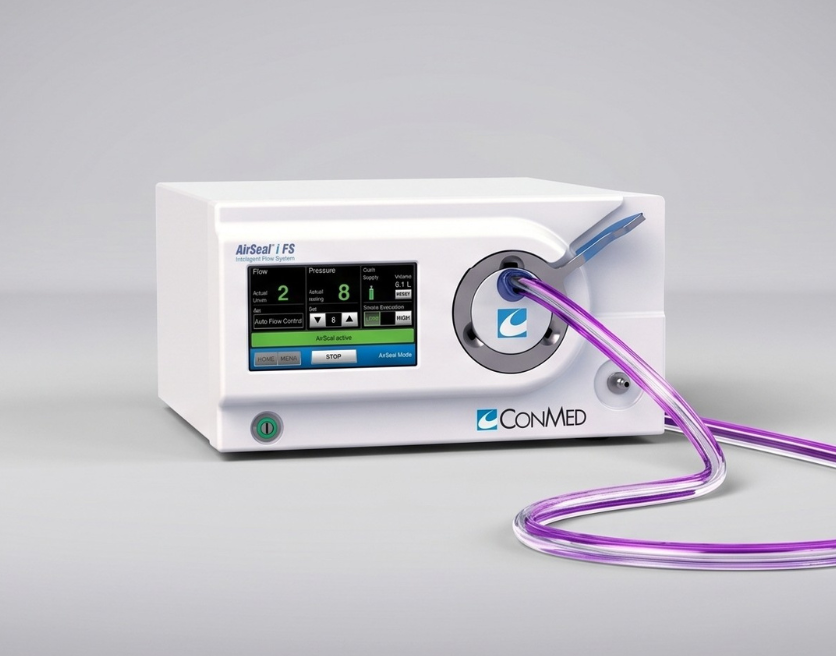
A eficácia clínica do AirSeal® é respaldada por 38 publicações revisadas por pares, envolvendo 11.520 pacientes em diferentes especialidades cirúrgicas.¹⁻³⁸
As evidências demonstram que a utilização do AirSeal® está associada à redução de complicações pós-operatórias clinicamente relevantes, incluindo:
Enfisema subcutâneo⁴˒⁷˒¹⁸
Íleo pós-operatório¹⁹˒²⁰
Quando comparada à insuflação convencional, a abordagem em baixa pressão possibilitada pelo AirSeal® também demonstrou redução de importantes parâmetros fisiológicos e clínicos, como:
Dor pós-operatória¹˒¹⁰˒¹²⁻¹⁷
CO₂ expirado (End-Tidal CO₂)¹⁻¹⁰
Pressão arterial média (MAP)²˒¹⁰
Pressão máxima das vias aéreas¹˒⁴˒⁶˒⁹˒¹⁰⁻¹²
Volume corrente pulmonar⁷˒¹²
1. Saway JP, McCaul M, Mulekar MS, McMahon DP, Richards WO. Review of Outcomes of Low Verses Standard Pressure Pneumoperitoneum in Laparoscopic Surgery. Am Surg. 2022;88(8):1832-1837. doi:10.1177/00031348221084956
2. Abaza R, Ferroni MC. Randomized Trial of Ultralow vs Standard Pneumoperitoneum during Robotic Prostatectomy. J Urol. 2022;208(3):626-632. doi:10.1097/JU.0000000000002729
3. Covotta M, Claroni C, Torregiani G, et al. A Prospective, Randomized, Clinical Trial on the Effects of a Valveless Trocar on Respiratory Mechanics During Robotic Radical Cystectomy: A Pilot Study. Anesth Analg. 2017;124(6):1794-1801. doi:10.1213/ANE.0000000000002027
4. Desroches B, Porter J, Bhayani S, Figenshau R, Liu PY, Stifelman M. Comparison of the Safety and Efficacy of Valveless and Standard Insufflation During Robotic Partial Nephrectomy. Urology. 2021;153:185-191.
5.5 Bucur P, Hofmann M, Menhadji A, et al. Comparison of Pneumoperitoneum Stability Between a Valveless Trocar System and Conventional Insufflation: A Prospective Randomized Trial. Urology. 2016;94:274-280. doi:10.1016/j.urology.2016.04.022
6.6 Razdan S, Ucpinar B, Okhawere KE, Badani KK. The Role of AirSeal in Robotic Urologic Surgery: A Systematic Review. J Laparoendosc Adv Surg Tech. 2023;33(1). doi:10.1089/lap.2022.0153
7. 7 Wei M, Yang W, Zhou J, et al. Comparison of AirSeal versus conventional insufflation system for retroperitoneal robot-assisted laparoscopic partial nephrectomy: a randomized controlled trial. World J Urol. 2024;42(1):90. Published 2024 Feb 21. doi:10.1007/s00345-024-04819-3
8. 8 Faizan M, Shariq K, Abbas FS, Murtaza DA, Naveed A, Tarar HM, Fahim R, Kumar S, Siddiqui SA. A comparison of CO2-related complications in partial nephrectomies between the AirSeal system and conventional system: a systematic review and meta-analysis. J Robot Surg. 2025;19:104. doi:10.1007/s11701-025-02227-2
9.9 Sroussi J, Elies A, Rigouzzo A, et al. Low pressure gynecological laparoscopy (7mmHg) with AirSeal® System versus a standard insufflation (15mmHg): A pilot study in 60 patients. J Gynecol Obstet Hum Reprod. 2017;46(2):155-158. doi:10.1016/j.jogoh.2016.09.003
10. 10 Buda A, Di Martino G, Borghese M, et al. Low-Pressure Laparoscopy Using the AirSeal System versus Standard Insufflation in Early-Stage Endometrial Cancer: A Multicenter, Retrospective Study (ARIEL Study). Healthcare (Basel). 2022;10(3):531. Published 2022 Mar 14. doi:10.3390/healthcare10030531
11.11 Hamid, M., Zaman, S., Mostafa, O.E.S. et al. Low vs. conventional intra-abdominal pressure in laparoscopic colorectal surgery: a prospective cohort study. Langenbecks Arch Surg 410, 12 (2024). https://doi.org/10.1007/s00423-024-03579-3
12. 12 Foley CE, Ryan E, Huang JQ. Less is more: clinical impact of decreasing pneumoperitoneum pressures during robotic surgery. J Robot Surg. 2021;15(2):299-307. doi:10.1007/s11701-020-01104-4
13. 13 Abaza R, Martinez O, Ferroni MC, Bsatee A, Gerhard RS. Same Day Discharge after Robotic Radical Prostatectomy. J Urol. 2019;202(5):959-963. doi:10.1097/JU.0000000000000353
14. 14 Celarier S, Monziols S, Célérier B, et al. Low-pressure versus standard pressure laparoscopic colorectal surgery (PAROS trial): a phase III randomized controlled trial. Br J Surg. 2021;108(8):998-1005. doi:10.1093/bjs/znab069
15. 15 Ferroni MC, Abaza R. Feasibility of robot-assisted prostatectomy performed at ultra-low pneumoperitoneum pressure of 6 mmHg and comparison of clinical outcomes vs standard pressure of 15 mmHg. BJU Int. 2019;124(2):308-313. doi:10.1111/bju.14682
16. 16 Ramshaw B, Forman B, Heidel E, Dean J, Gamenthaler A, Fabian M. A Clinical Quality Improvement (CQI) Project to Improve Pain After Laparoscopic Ventral Hernia Repair. Surg Technol Int. 2016;29:125-130.
17. 17 Ramshaw B, Vetrano V, Jagadish M, Forman B, Heidel E, Mancini M. Laparoscopic approach for the treatment of chronic groin pain after inguinal hernia repair : Laparoscopic approach for inguinodynia. Surg Endosc. 2017;31(12):5267-5274. doi:10.1007/s00464-017-5600-3
18. 18 Feng TS, Heulitt G, Islam A, Porter JR. Comparison of valve-less and standard insufflation on pneumoperitoneum-related complications in robotic partial nephrectomy: a prospective randomized trial. J Robot Surg. 2021;15(3):381-388. doi:10.1007/s11701-020- 01117-z 2.
19.19 Grieco, M., Tirelli, F., Agnes, A., Santocchi, P., Biondi, A., & Persiani, R. (2021). High-pressure CO2 insufflation is a risk factor for postoperative ileus in patients undergoing TaTME. Updates in surgery, 73(6), 2181–2187. https://doi.org/10.1007/s13304-021-01043-1
20. 20 Rohloff M, Cicic A, Christensen C, Maatman TK, Lindberg J, Maatman TJ. Reduction in postoperative ileus rates utilizing lower pressure pneumoperitoneum in robotic-assisted radical prostatectomy. J Robot Surg. 2019;13(5):671-674. doi:10.1007/s11701-018-00915-w
21. 21 Kikhia, R. M., Price, K., Alli, V., Pryor, A., Gracia, G., Rubano, J., Schnur, J., & Telem, D. (2017). Prospective evaluation of low insufflation pressure cholecystectomy using an insufflation management system versus standard CO2 pneumoperitoneum. SAGES Annual Meeting Abstracts Archive.
22. Ayoub CH, Armache AK, El-Asmar JM, et al. The impact of AirSeal® on complications and pain management during robotic-assisted radical prostatectomy: a single-tertiary center study. World J Urol. 2023;41(10):2685-2692. doi:10.1007/s00345-023-04573-y
23. Zhi W, Wang Y, Wang L, Yang L. Comparative assessment of safety and efficacy between the AirSeal system and conventional insufflation system in robot-assisted laparoscopic radical prostatectomy: a systematic review and meta-analysis. J Robot Surg. 2024;18(1):291. Published 2024 Jul 23. doi:10.1007/s11701-024-02000-x
24. Vasdev N, Martin N, Hackney AB, Piedad J, Hampson A, Shan G-M, et al. Comparing different pneumoperitoneum (12 vs. 15 mmHg) pressures with cytokine analysis to evaluate clinical outcomes in patients undergoing robotic-assisted laparoscopic radical cystectomy and intracorporeal robotic urinary diversion. BJUI Compass. 2023;4(5):575–583. https://doi.org/10.1002/bco2.240
25. George AK, Wimhofer R, Viola KV, Pernegger M, Costamoling W, Kavoussi LR, Loidl W. Utilization of a novel valveless trocar system during robotic-assisted laparoscopic prostatectomy. World J Urol. 2015;33(11):1695–1699. https://doi.org/10.1007/s00345-015-1521-8
26. Fan G, Chen Y, Wang J, Wu Y, Wang Y, Hu K, Tang T. Perioperative outcomes and safety of valveless insufflation system in minimally invasive urological surgery: A systematic review and meta-analysis. J Robot Surg. 2024;18:269. https://doi.org/10.1007/s11701-024-02023-4
27. Yezdani M, Yu SJ, Lee A, Taylor B, McGill A, Monahan K, Lee D. MP23-17 Improved Outcomes During Robotic Prostatectomy Utilizing AirSeal Technology. J Urol. 2016;195(4S):e268. https://doi.org/10.1016/j.juro.2016.02.739
28. Rydlewicz JA, Suzo AJ, Mikami DJ, Needleman BJ. Retrospective study of the AirSeal™ system for laparoscopic bariatric surgery. J Minim Invasive Surg. 2025;32(2):123-130. https://doi.org/10.1007/s00464-025-01234-5
29. Annino F, Topazio L, Autieri D, Verdacchi T, De Angelis M, Asimakopoulos AD. Robotic partial nephrectomy performed with AirSeal versus a standard CO₂ pressure pneumoperitoneum insufflator: a prospective comparative study. Surg Endosc. 2017;31(4):1583–1590. https://doi.org/10.1007/s00464-016-5144-y
30. Boualaoui I, Bey E, De Villeneuve MH, Dergamoun H, Droupy S, Wagner L. Medico-Economic Impact of the AirSeal® Insufflator: Example of Laparoscopic Sacrocolpopexy. Clin Surg. 2021;6:3084.
31. de’Angelis N, Abdalla S, Carra MC, Lizzi V, Martínez-Pérez A, Habibi A, Bartolucci P, Galactéros F, Laurent A, Brunetti F. Low-impact laparoscopic cholecystectomy is associated with decreased postoperative morbidity in patients with sickle cell disease. Surg Endosc. 2018;32(5):2300–2311. https://doi.org/10.1007/s00464-017-5925-y
32. Forte F, Tripodi D, Pironi D, Corongiu E, Gagliardi F, Frisenda M, Gallo G, Quarantiello A, Di Lorenzo G, Cavaleri Y, Salciccia S, Lori E, Sorrenti S. Comparison of laparoscopic partial nephrectomy performed with AirSeal® system vs. standard insufflator: results from a referral center. Front Surg. 2023;10:1220332. https://doi.org/10.3389/fsurg.2023.1220332
33. Katoh H, Ikeda Y, Saito Y, et al. The Usefulness of AirSeal™ Intelligent Flow System in Gas Insufflation Total Endoscopic Thyroidectomy. Indian J Otolaryngol Head Neck Surg. 2023;75:115–120. https://doi.org/10.1007/s12070-022-03257-0
34. La Falce S, Novara G, Gandaglia G, Umari P, De Naeyer G, D’Hondt F, Beresian J, Carette R, Penicka M, Mo Y, Vandenbroucke G, Mottrie A. Low Pressure Robot-assisted Radical Prostatectomy With the AirSeal System at OLV Hospital: Results From a Prospective Study. Clin Genitourin Cancer. 2017;15(6):e1029–e1037. https://doi.org/10.1016/j.clgc.2017.05.027
35. Lu Y, Zou Q, Jiang B, Li Q. Perioperative outcomes and safety of valveless insufflation system in minimally invasive urological surgery: a systematic review and meta-analysis. Int J Surg. 2024;110(9):5763–5770. https://doi.org/10.1097/JS9.0000000000001634
36. Miyano G, Morita K, Kaneshiro M, Miyake H, Nouso H, Yamoto M, Koyama M, Nakano R, Tanaka Y, Fukumoto K, Urushihara N. Laparoscopic Toupet Fundoplication using an Air Seal Intelligent Flow System and Anchor Port in a 1.8-kg infant: A Technical Report. Asian J Endosc Surg. 2015;8(3):357–360. https://doi.org/10.1111/ases.12182
37. Paull JO, Parsacandola SA, Graham A, Hota S, Pudalov N, Obias V. The impact of the AirSeal® valve-less trocar system in robotic colorectal surgery: a single-surgeon retrospective review. J Robot Surg. 2021;15(1):87–92. https://doi.org/10.1007/s11701-020-01071-w
38. Shahait M, Cockrell R, Yezdani M, Yu SJ, Lee A, McWilliams K, Lee DI. Improved Outcomes Utilizing a Valveless-Trocar System during Robot-assisted Radical Prostatectomy (RARP). JSLS. 2019;23(1):e2018.00085. https://doi.org/10.4293/JSLS.2018.00085
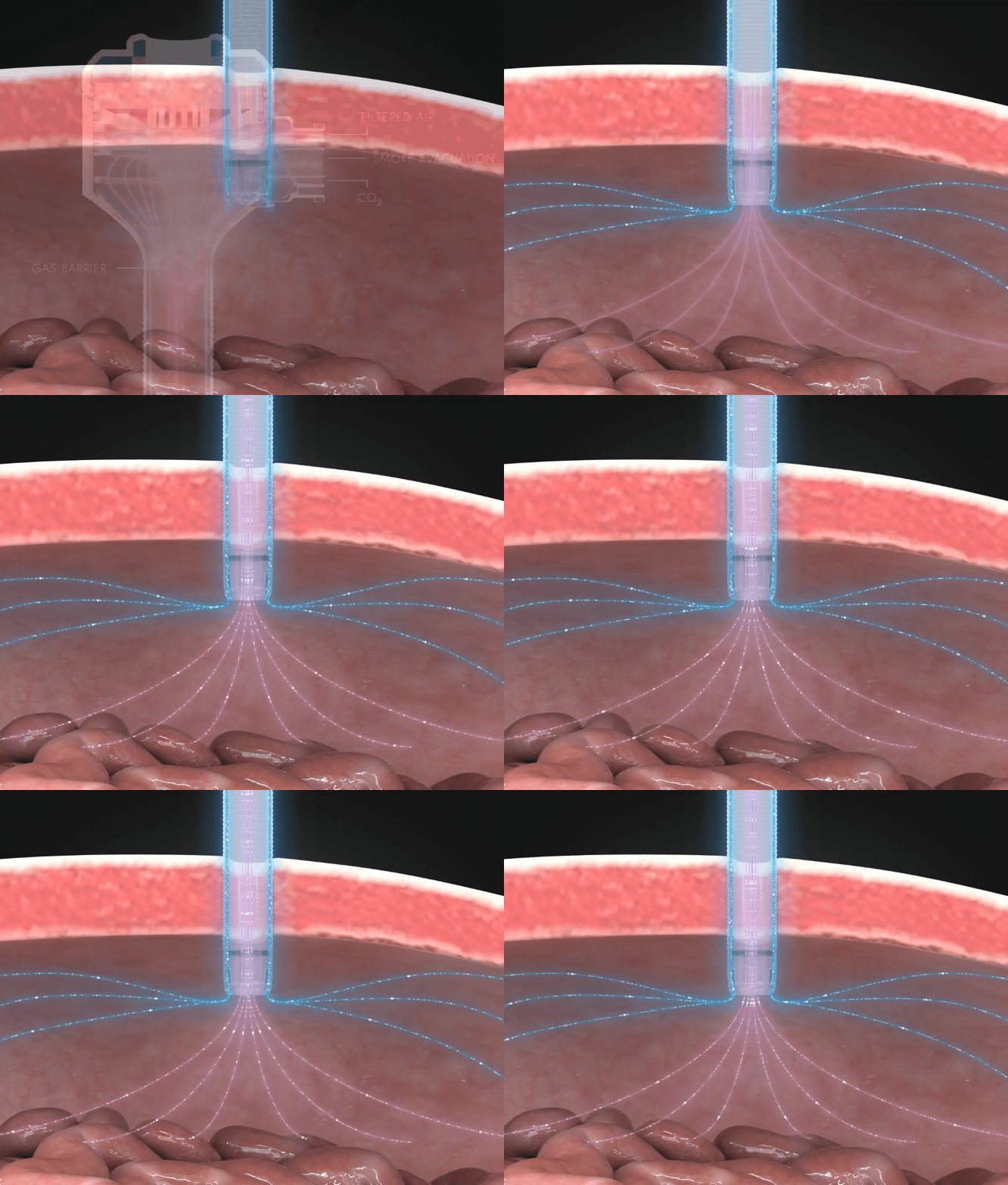
Diferentemente dos sistemas tradicionais, o AirSeal® utiliza uma barreira gasosa dinâmica para controlar a pressão da cavidade abdominal em tempo real.
Essa tecnologia permite compensar rapidamente variações causadas por vazamentos ou aspiração, além de promover a remoção contínua da fumaça cirúrgica, contribuindo para uma visualização mais consistente durante todo o procedimento.
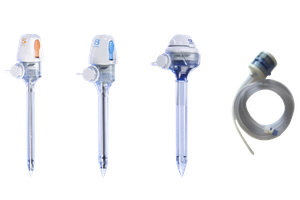
O AirSeal® conta com trocartes e acessórios desenvolvidos para procedimentos videolaparoscópicos, levando os benefícios da insuflação estável e da evacuação contínua de fumaça para diferentes especialidades cirúrgicas.
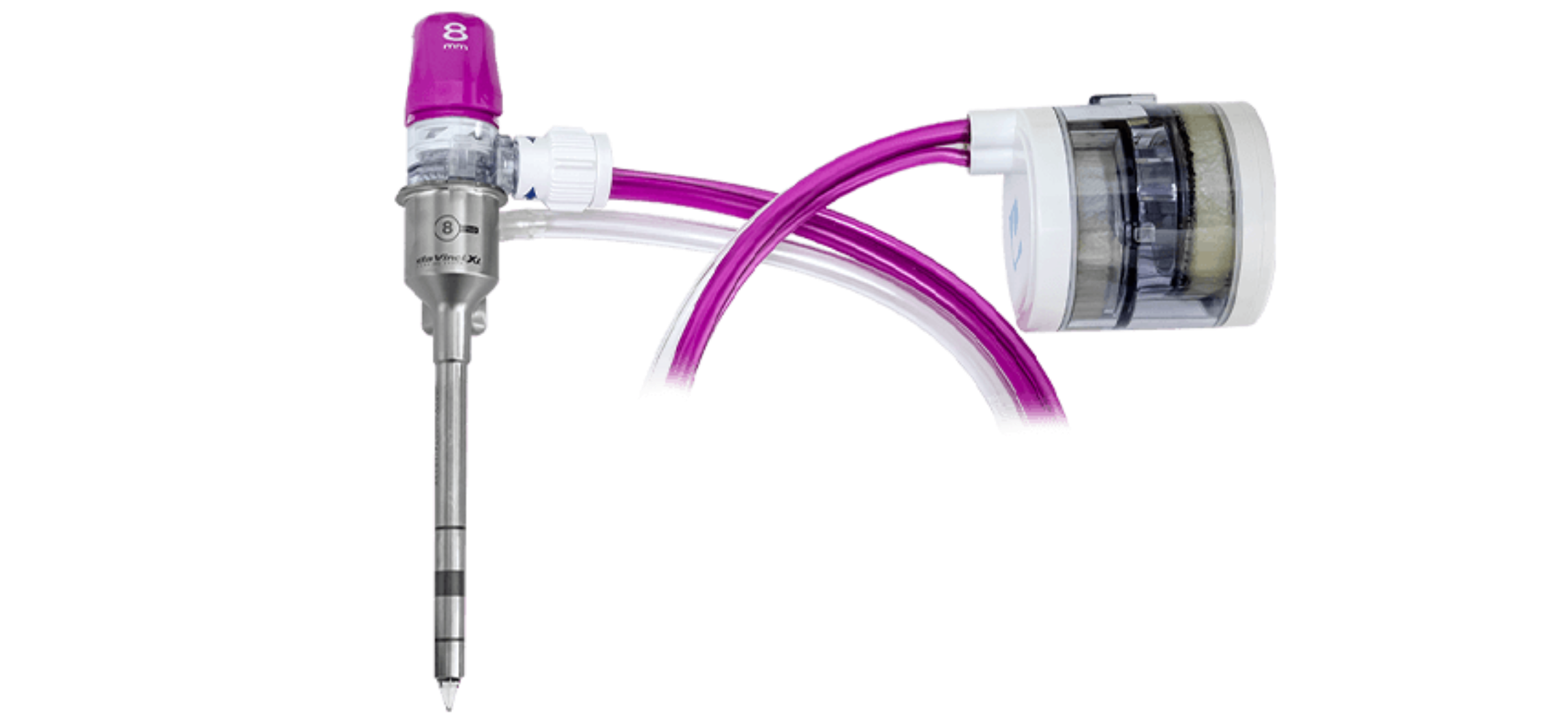
Compatível com os sistemas da Vinci X® e da Vinci Xi®, o AirSeal® complementa a cirurgia robótica com uma solução de insuflação projetada para atender às demandas de procedimentos complexos e de longa duração.
A combinação entre controle de pressão e evacuação contínua de fumaça contribui para uma visualização consistente do campo cirúrgico, apoiando a precisão e a eficiência características da cirurgia robótica.
Ao contribuir para melhores desfechos clínicos e maior eficiência intraoperatória, o AirSeal® pode apoiar iniciativas voltadas à otimização dos fluxos assistenciais e à implementação de protocolos de recuperação acelerada.